Digital marketing trends 2026 show that digital marketing is becoming more intelligent, more conversational, and more accountable. The biggest shift is not simply that artificial intelligence is everywhere—it is that AI is changing how people discover brands, compare products, receive support, and make buying decisions.
For marketers, this creates a clear challenge: producing more content is no longer enough. Brands need to be useful, distinctive, trustworthy, and easy to find wherever their customers are searching, scrolling, watching, or asking questions.
Here are the digital marketing trends 2026 that are shaping the future and how businesses can respond.
If you’re new to digital marketing and want to understand the fundamentals, explore our Complete Guide to Digital Marketing.
Table of Contents
1. Digital Marketing Trends 2026: AI Search is Reshaping Discovery
Traditional search engine optimization is evolving. People increasingly ask AI-powered search tools complete questions rather than typing short keyword phrases. Instead of searching “best email marketing software,” users now complete questions such as, “Which email marketing platform is most suitable for a small online store with a tight budget?”
This changes what strong search content looks like. Brands need pages that answer real questions clearly, demonstrate expertise, and provide helpful details such as comparisons, pricing context, use cases, reviews, FAQs, and original insights.
Google is expanding commercial experiences within AI-powered Search, including ways for businesses to appear in AI Mode and more conversational shopping journeys. Google’s 2026 update makes one thing clear: discovery is becoming less linear and more guided.
What marketers should do
- Create content around customer questions, not only target keywords.
- Use clear headings, FAQs, product information, and structured data.
- Publish firsthand experience, expert viewpoints, customer stories, and original research.
- Keep your business information, pricing, availability, and product pages accurate.
- Measure visibility and conversion across search, AI referrals, and branded searches—not rankings alone.
The goal is to be the brand an AI system can confidently surface because your information is useful, credible, and current.
2. Conversational commerce will grow
Customers no longer want to move through a long path of web pages just to get a simple answer. They want to ask questions, compare options, receive recommendations, and sometimes complete a purchase within the same conversation.
AI assistants, chatbots, messaging apps, and in-app shopping tools are making this possible. OpenAI has introduced richer product discovery experiences in ChatGPT, helping people explore and compare products in a conversational format. OpenAI’s product discovery announcement reflects a broader shift: commerce is becoming more interactive and assistance-led.
For marketers, this means product information needs to do more than look good on a website. It must be organized, complete, and ready to answer questions. Product names, descriptions, sizes, prices, benefits, delivery details, images, reviews, and return policies all influence whether a customer can confidently act.
What marketers should do
- Improve product feeds and product descriptions.
- Build chat experiences that answer common customer questions quickly.
- Connect chat and messaging to a human support option when necessary.
- Identify the questions customers ask before purchasing and turn them into content.
- Reduce friction between discovery, consideration, and checkout.
In 2026, a fast and helpful answer can be as valuable as a beautifully designed advertisement.
3. AI will move from content assistant to marketing teammate
Most marketers have already used AI to brainstorm captions, draft emails, summarize reports, or create content variations. In 2026, AI will play a bigger role in campaign planning, audience research, creative production, optimization, and customer communication.
The important distinction is that AI should support strategy—not replace it. A generic AI-generated campaign can be produced in minutes, but it will rarely create lasting attention or trust. Strong marketing still depends on human insight: understanding customer pain points, cultural context, brand personality, and business priorities.
The most effective teams will use AI to remove repetitive work and create more space for higher-value thinking. For example, AI can turn one campaign brief into multiple ad variations, help segment customer feedback, summarize performance data, or generate first drafts for a content calendar. Marketers can then refine the work with their knowledge of the audience and brand.
What marketers should do
- Build a clear AI workflow for research, drafting, review, and approval.
- Use AI to create options, then test and improve them.
- Create brand guidelines for voice, visuals, claims, and compliance.
- Review all facts, statistics, and customer-facing language before publishing.
- Focus team time on audience insight, creative direction, and strategic decisions.
The winning teams will not be the ones that automate everything. They will be the ones that combine automation with better judgment.
4. AI-generated creative will demand transparency and quality
AI can now help marketers generate images, video concepts, voiceovers, product variations, and ad copy at a remarkable speed. This makes creative testing more accessible, especially for small businesses that previously lacked large design or production budgets.
However, the rise of AI creative also raises the standard for quality and trust. Consumers are becoming more aware of synthetic images, edited videos, and AI-generated claims. Platforms are responding with more disclosure tools. For example, Google announced expanded “How this ad was made” transparency information for ads created or altered with generative AI tools, while Meta is expanding information around AI-influenced ads. Google and Meta are both signaling that transparency will matter more.
This does not mean businesses should avoid AI visuals. It means they should use them responsibly. AI works well for concept development, background variations, simple product demonstrations, and rapid testing. It should not be used to mislead consumers, fabricate endorsements, or make unrealistic product promises.
What marketers should do
- Disclose AI use where required or where it improves trust.
- Avoid fake testimonials, deceptive before-and-after images, and misleading demonstrations.
- Keep human oversight in every final creative decision.
- Test whether AI-generated content feels credible and on-brand.
- Invest in original photography, customer stories, and real-world proof alongside AI assets.
Authenticity will become a competitive advantage in an internet filled with easily generated content.
5. Short-form video will remain essential—but depth will matter too
Short-form video continues to be one of the strongest ways to earn attention. Reels, Shorts, TikTok videos, product demos, creator clips, behind-the-scenes content, and quick educational videos can help brands reach audiences quickly.
But the trend for 2026 is not simply “make more short videos.” It is “make videos that are useful enough to earn attention.” A quick tip, a relatable customer problem, a product demonstration, a myth-busting clip, or a founder’s perspective often performs better than a highly polished but vague promotional video.
At the same time, longer videos, webinars, tutorials, podcasts, and live streams will remain important for building deeper trust. Short-form content can introduce a brand; longer-form content can help a buyer make a decision.
What marketers should do
- Create short videos around one clear message or question.
- Use real people, products, and customer scenarios wherever possible.
- Repurpose long-form content into short clips.
- Add captions, clear hooks, and a simple call to action.
- Measure watch time, saves, shares, clicks, and conversions—not views alone.
The best video strategy combines quick attention with meaningful education.
6. First-party data and privacy will become central to growth
Marketers have relied for years on third-party data, tracking tools, and platform targeting. But privacy expectations, regulations, and browser changes continue to limit how easily businesses can follow users across the web.
As a result, first-party data is becoming more valuable. This includes information customers willingly share through purchases, newsletter sign-ups, loyalty programs, surveys, website accounts, events, and customer support interactions.
The opportunity is not to collect every possible data point. It is to collect useful information with clear permission and use it to create better experiences. A customer who tells a skincare brand about their skin concern, for instance, should receive more relevant education and product recommendations—not irrelevant messages every day.
What marketers should do
- Strengthen email newsletters, loyalty programmes, surveys, and lead magnets.
- Explain clearly why you collect data and how customers benefit.
- Segment audiences based on meaningful preferences and behaviour.
- Keep consent and data management practices transparent.
- Use customer data to improve relevance, not to overwhelm people.
Privacy is no longer only a legal issue. It is part of the customer experience.
7. Creator partnerships will become more performance-focused
Influencer marketing is maturing. Brands are moving beyond vanity metrics such as follower counts and looking more closely at fit, trust, engagement quality, website visits, leads, sales, and reusable content value.
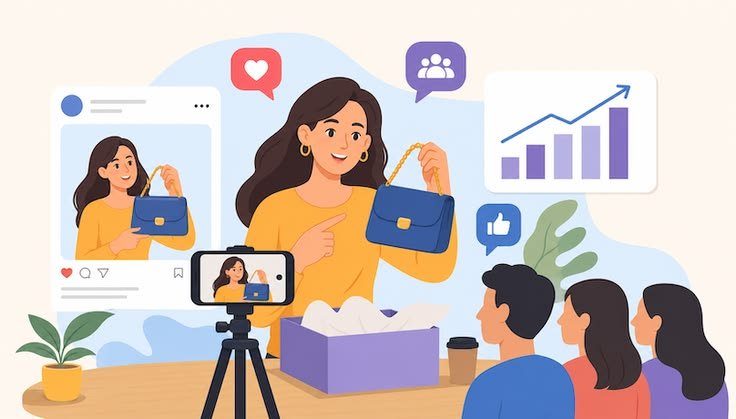
Micro-creators and niche creators will remain especially valuable because they often have a focused audience and a more personal relationship with their followers. A local fitness coach, B2B consultant, parenting creator, or regional food reviewer may have more influence over the right audience than a celebrity with millions of followers.
The strongest partnerships will feel like collaborations, not scripted advertisements. Creators understand their communities; brands should give them direction, product knowledge, and creative freedom.
What marketers should do
- Choose creators based on audience relevance and brand fit.
- Define success metrics before the campaign starts.
- Use trackable links, referral codes, and campaign-specific landing pages.
- Request permission to repurpose high-performing creator content in ads.
- Build long-term relationships instead of one-off promotions where possible.
Trust is the true currency of creator marketing.
8. Measurement will focus more on business impact
In 2026, marketers will face increasing pressure to connect activity to business outcomes. Likes, impressions, and follower growth can be useful signals, but they do not always prove value.
The shift is toward measuring what matters at each stage of the funnel: qualified leads, conversion rate, cost per acquisition, revenue, repeat purchases, customer lifetime value, and retention. This does not mean every marketing action must produce an immediate sale. Brand awareness still matters. But marketers need a clearer view of how awareness contributes to future demand.
What marketers should do
- Define one primary goal for every campaign.
- Match metrics to the campaign objective.
- Use dashboards that combine channel data with leads, sales, and customer data.
- Run experiments to understand which channels and messages truly drive results.
- Review performance regularly and turn insights into specific changes.
Better measurement is not about reporting more numbers. It is about making better decisions.
These digital marketing trends 2026 discussed above show how AI, privacy, creators, and customer experience are transforming modern marketing.
Final thoughts
Digital marketing in 2026 will reward brands that are helpful, human, adaptable, and trustworthy. AI will accelerate content creation and customer interaction, but it will also make originality and credibility more important than ever.
The best approach is not to chase every new platform or tool. Start with your audience. Understand what they need, where they spend time, what questions they ask, and what prevents them from buying. Then use technology to deliver a clearer, faster, and more personal experience.
The future of digital marketing trends 2026 will belong to brands that use AI intelligently while still sounding unmistakably human.
As a digital marketer, I believe staying adaptable while keeping the human side of marketing at the centre will be key to succeeding in 2026.